Iron Deficiency Without Anaemia: Why ‘Normal’ Blood Tests Don’t Always Mean You’re Well
You feel wiped out. Walking up the stairs leaves you short of breath. Your heart sometimes races for no obvious reason. You’re more irritable than usual, your concentration is poor, and you don’t quite feel like yourself.
You go to the GP, have some blood tests, and are told:
“Everything’s normal.”
So why do you still feel awful?
One important reason this can happen is iron deficiency without anaemia – low iron stores even though your haemoglobin is still in the “normal” range.
This blog explores what that means, how it’s missed, and what you can realistically do about it.
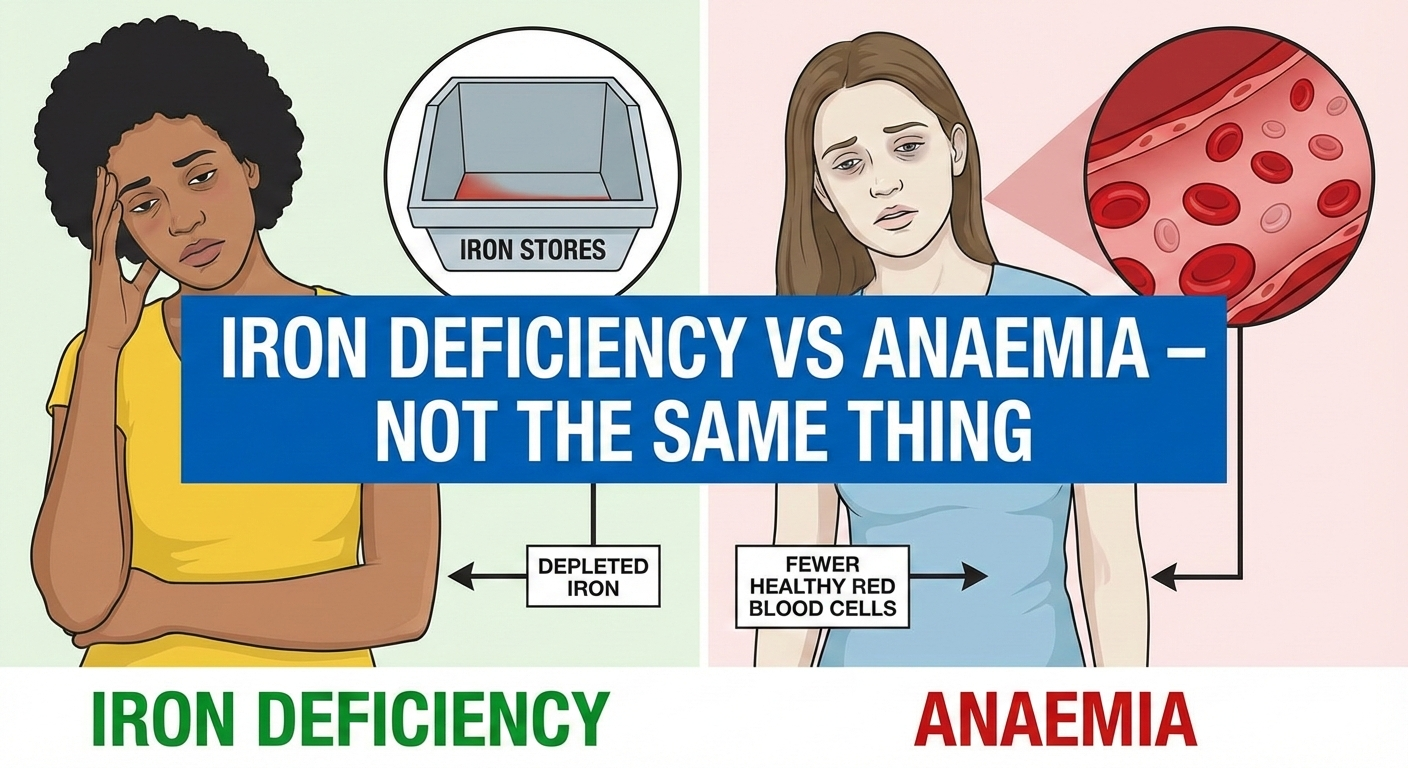
Iron Deficiency vs Anaemia – Not the Same Thing
A quick bit of definitions:
- Haemoglobin (Hb) is the protein in red blood cells that carries oxygen around your body.
- Anaemia means your haemoglobin level has dropped below the reference range for your age and sex.
- Iron deficiency means your body’s iron stores are low. Iron is needed to make haemoglobin, but stores can fall long before haemoglobin finally drops.
In other words:
You can have significant iron deficiency while your haemoglobin is still technically “normal”.
By the time anaemia appears on a blood test, iron deficiency has usually been present for a while. If clinicians only look for a low haemoglobin, they may miss earlier stages where you’re symptomatic but don’t yet meet the lab’s definition of anaemia.
What Iron Deficiency Can Feel Like
Iron is involved in far more than just red blood cells. It affects energy production, muscle function, brain chemistry and the autonomic nervous system (the system that controls heart rate, blood pressure, gut movement, etc.).
That’s why iron deficiency can cause a frustrating mix of symptoms, for example:
- Tiredness and fatigue out of proportion to your activity
- Lightheadedness or feeling a bit “swimmy”
- Palpitations – feeling like your heart is pounding or racing
- Shortness of breath on exertion – climbing stairs or walking quickly feels harder than it used to
- Headaches
- Poor concentration or “brain fog”
- Restless legs, twitchiness, or an urge to move your legs in the evenings
- Mood changes – irritability, feeling on edge, low mood, or tearfulness
All of these are non-specific. Thyroid problems, sleep disturbance, anxiety, depression, vitamin deficiencies, chronic infections, long COVID, and many other conditions can present in similar ways.
So iron deficiency is only one possible explanation, not the only one. But it is common, and it’s frequently not looked for properly.
Why “Your Bloods Are Normal” Can Be Misleading
There are a few common scenarios:
- Only haemoglobin was checked.
If the GP ordered a basic full blood count (FBC) but no iron studies, you might have:- Normal haemoglobin
- Normal or only slightly altered red cell indices
- No comment at all about iron
- Result: you’re told everything is normal, even if your iron stores are already running low.
- Ferritin is “within range” but suboptimal.
- Ferritin is a protein that stores iron. It’s often used as a marker of iron stores.
- Many labs report a very wide reference range, for example “15–300 µg/L” (exact numbers vary).
- A ferritin of 15 or 20 might not be flagged as “abnormal” on the printout, but in real life many people feel better when their ferritin is above about 30, and often closer to 50 µg/L or more.
- Different guidelines and labs use different cut-offs, so there’s no single magic number.
- Ferritin is falsely reassuring because of inflammation.
Ferritin is also an acute phase reactant, meaning it can rise in response to inflammation, infection or chronic illness.
That means you can have:- True iron deficiency
- An apparently “normal” or even high ferritin because your body is inflamed for some other reason
- And the deficiency gets missed.
This is where looking at an iron panel, not just ferritin, can be much more helpful.
Beyond Ferritin: Iron Panel and Transferrin Saturation
A more complete look at iron status usually involves several tests, often called an iron panel:
- Serum iron – how much iron is circulating in the blood at the time of the test (this can fluctuate).
- Total iron binding capacity (TIBC) or transferrin – how much “transport capacity” is available to carry iron.
- Transferrin saturation – the percentage of that transport capacity actually carrying iron.
- Ferritin – a marker of stored iron.
In straightforward iron deficiency, you often see:
- Low or low-normal ferritin
- Low transferrin saturation
- Raised TIBC or transferrin (the body is “asking” for more iron)
Transferrin saturation is especially useful because it can help flag iron deficiency even when ferritin is affected by inflammation.
None of this should be interpreted in isolation. A good assessment looks at:
- Symptoms
- Iron panel
- Other blood tests (B12, folate, thyroid, inflammatory markers, coeliac screen, etc. if indicated)
- Menstrual history, diet, gut symptoms, medications and other risk factors
Common Causes of Iron Deficiency
Some of the more frequent contributors include:
- Heavy menstrual bleeding
- Pregnancy and breastfeeding (increased iron demands)
- Dietary intake – poorly planned vegetarian or vegan diets, or very restricted eating
- Poor absorption – coeliac disease, inflammatory bowel disease, gastric surgery, or long-term acid-suppressing medication (e.g. proton pump inhibitors)
- Asymptomatic Helicobacter Pylori infection in the stomach
- Chronic inflammation or chronic illness
- Slow blood loss from the gut – for example from ulcers, polyps, or in rare cases, cancers
In men and post-menopausal women, iron deficiency should always be taken seriously, because there isn’t a monthly menstrual explanation. In these groups, unexplained iron deficiency often triggers further investigation, especially of the gut.
Why Iron Deficiency Without Anaemia Gets Missed
This isn’t usually about incompetence or bad faith. It’s more about system habits and time pressure:
- Busy clinicians often rely on whether a test is flagged “abnormal” by the lab system.Lack of awareness that iron deficiency can occur without anaemia
- If haemoglobin is normal and ferritin isn’t frankly low, there may be no red flag in the software.
- Symptoms such as tiredness and low mood are incredibly common and overlap with stress, burnout, lifestyle issues and mental health conditions.
What this means in practice:
- You can be symptomatic with “borderline” or “low-normal” iron stores.
- You can be told your results are fine when they aren’t fine for you.
- The conversation stops at “normal bloods” instead of, “You feel rubbish — let’s work out why.”
What You Can Do If This Sounds Familiar
This is not an invitation to self-diagnose everything as iron deficiency. But if the picture resonates with you, here are some sensible next steps.
1. Write your symptoms down
include:
- What you feel (fatigue, palpitations, shortness of breath, brain fog, mood changes, restless legs, etc.)
- When they started
- How they affect day-to-day life (work, parenting, exercise, social life)
- Anything that makes them better or worse
This turns a vague “I feel tired” into a clearer clinical picture.
2. Clarify which blood tests you’ve actually had
Ask for a copy of your results (you’re entitled to them). Check whether you’ve had:
- Full blood count (FBC)
- Ferritin
- Iron studies (serum iron, TIBC/transferrin, transferrin saturation)
- Thyroid function tests
- B12 and folate
- Inflammatory markers (CRP/ESR)
If you’ve only ever had an FBC, it’s perfectly reasonable to ask whether looking at ferritin and iron studies would be appropriate.
3. Look at numbers, not just “normal” vs “abnormal”
When you see your ferritin:
- Very low values (e.g. under 15–20 µg/L) are strongly suggestive of low iron stores.
- Many people feel unwell with ferritin under about 30 µg/L.
- A fair number report feeling better when ferritin is closer to 50 µg/L or above.
These aren’t hard rules, and different health systems use different thresholds. The key point is: “within range” doesn’t always mean “optimal for you.”
4. Review diet and medications
- Do you eat iron-rich foods (red meat, dark poultry meat, beans, lentils, tofu, dark leafy greens, fortified cereals)?
- Are you on long-term antacids or proton pump inhibitors, which can affect absorption?
- Have you had any gut issues (diarrhoea, constipation, bloating, abdominal pain, change in bowel habit)?
These details help your doctor decide whether to investigate further.
5. Don’t start long-term iron supplements blindly
Short courses of iron can be useful, but there are some important cautions:
- Iron tablets can cause constipation, stomach upset, or dark stools.
- Taking iron when you don’t need it can be unhelpful or occasionally harmful.
- Unexplained iron deficiency in men or post-menopausal women must not just be “patched” with tablets without looking for the underlying cause.
It’s better to take iron under medical supervision, with a clear plan for dose, duration, and follow-up bloods.
Red-Flag Symptoms: When to Seek Urgent Help
Regardless of iron levels, certain symptoms should never be ignored. You should seek urgent medical advice (NHS 111, GP on the day, or A&E depending on severity) if you experience:
- Chest pain, especially if it is heavy, tight, or radiates to the arm or jaw
- Severe shortness of breath or difficulty breathing at rest
- Black, tarry, or bloody stools
- Vomiting blood or material that looks like coffee grounds
- Unintentional, significant weight loss
- Fainting episodes or near-fainting with exertion
- Sudden, severe palpitations with dizziness or chest pain
These are not “wait and see” situations.
A Calm Next Step
If you recognise yourself in this description – persistent tiredness, palpitations, breathlessness on exertion, normal haemoglobin, and no clear explanation – it may be worth a more detailed review of your symptoms, lifestyle, and blood tests, including ferritin and iron studies.
A GP with an interest in iron and metabolic health at Rubicon Private Health can go through this in a structured way, but whoever you see, the essentials are the same: listen properly, look at the right tests, and take your symptoms seriously.
Important Disclaimer
This article is for general information only. It is not a diagnosis and not a substitute for a consultation with your own GP or healthcare professional. Symptoms like tiredness, palpitations and breathlessness have many possible causes, some of them serious. Always seek personalised medical advice before starting or changing any treatment.